
Apothecary Addict: On the Meaning of an Old-World Name

Updated: Jul 2

Earth Day, 2026
There was a moment, not so long ago, when I looked at what had gathered around me — oils, butters, resins, herbs, clays — an ever-growing collection of earth-born materials.
I began, almost without thinking, to call it my apothecary.
Not as a brand. Not yet. Simply as a truth.
This is a reflection on why I chose the name Apothecary Addict, and what that name has come to mean over time.
It sat in jars and bottles, tucked into drawers, lining cupboards, filling the air with its subtle, shifting scents and painting my shelves with the peaceful palette of nature — a small, living collection of things gathered slowly over time. Some were chosen for their beauty, others for their function, and many for reasons I could not fully explain, only feel. There was a sense, even then, that these materials carried something with them — history, origin, purpose.
Alongside this grew a raw desire to understand these materials more deeply — to learn their qualities, to work with them, and to bring them into form.
It was shaped by a long-standing love of herbs and the earth, and a growing passion to create simple, intentional skincare from the most beautiful ingredients I could find — not only for their function, but for their integrity, their origin, and the way they felt in the hand.
And in time, the name followed...
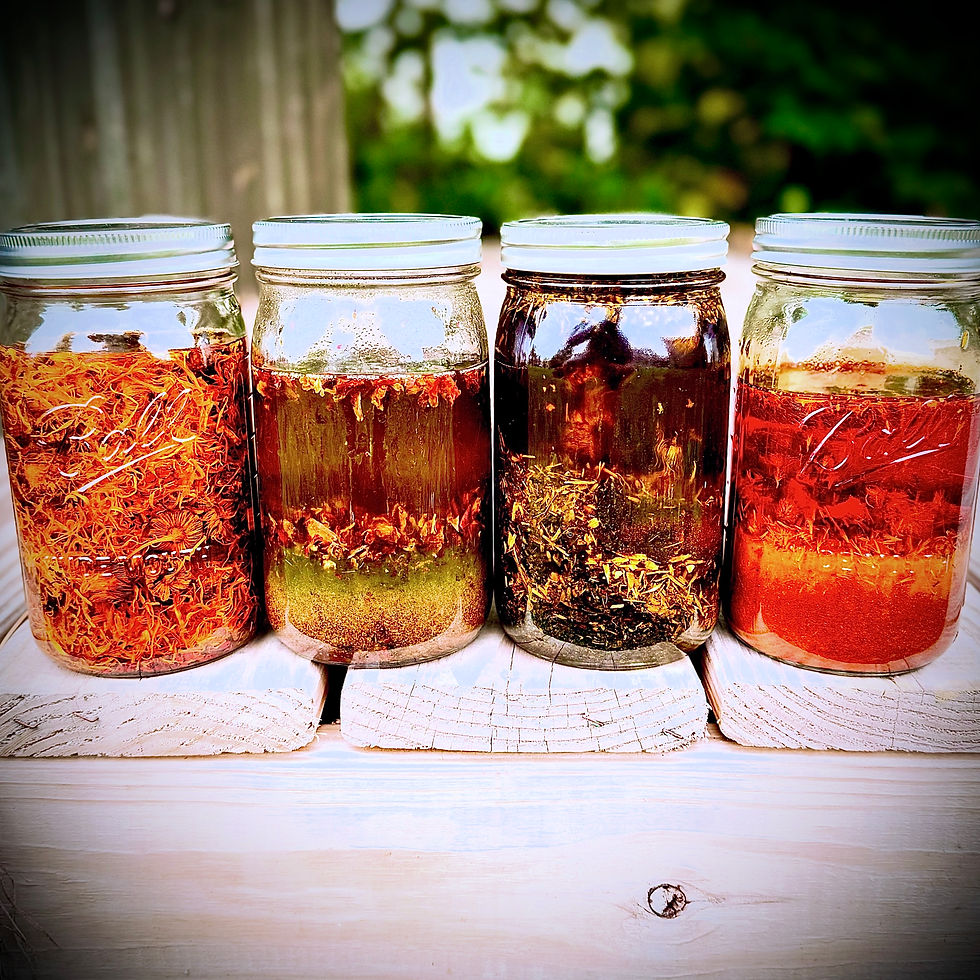
The word apothecary reaches back centuries — from the Greek apothēkē, meaning a storehouse — a place of keeping. By the medieval period, apothecaries had become known as those who worked with the raw materials of the natural world: herbs, roots, oils, resins, minerals. They prepared remedies not from abstraction, but from what could be grown, gathered, infused, distilled.
To work in this way is not new — it is a continuation.

Before the rise of modern pharmaceuticals in the late nineteenth and early twentieth centuries, this was the way care was understood: close to the earth, guided by observation, experience, and a kind of gentle, attentive reverence for what the natural world could offer.
Apothecaries were not separate from their materials — they were in relationship with them.
Over time, much of this shifted.
As chemistry advanced and industrial processes took hold, the language of care began to change. Ingredients became isolated, replicated, synthesized. Systems became faster, more scalable, and more standardized.
There is value in this evolution — but something, too, was left behind.
A closeness. A slowness. A certain kind of attention.
A closeness. A slowness. A certain kind of attention.

My work returns, in its own small way, to that earlier rhythm.
Each oil, butter, botanical, clay, or resin I use is chosen with intention — not only for what it does, but for what it is. Where it comes from. How it is grown, harvested, prepared. Whether it remains, in essence, what it began as.
This is not about perfection, nor about nostalgia.
It is about relationship.
And sometimes — in some of the most gratifying moments — the apothecary is not contained to shelves at all.
There are moments when it extends outward — into the landscape itself. Wild violets in early spring, dandelion and jewelweed along the edges of a path, desert chaparral gathered under a wide sky, fleabane noticed where it might otherwise be overlooked.
For this is, after all, where the apothecary is born — in the earth itself. Not in the vessel, but in the living world from which it is drawn.
In these moments, the earth reveals itself as the original apothecary — abundant, generous, and continually offering.


There are certain materials — and certain sources — I return to again and again, not only for their quality, but for the care behind how they are grown, gathered, and prepared. While some are foraged or cultivated close to home, many are sourced through a trusted network of suppliers whose work reflects the same level of intention and respect for the earth. What follows are only a few among many — a small window into the stewards I have come to rely on over time.
For fine aromatics — essential oils, absolutes, and CO₂ extracts — I often turn to Eden Botanicals, whose materials are carefully sourced and transparently documented, offering a level of clarity and integrity that is essential when working so closely with scent.
Many of the Brazilian butters I work with are sourced through Paris Fragrances USA — raw, unrefined, and deeply true to their origin. Their cupuaçu, murumuru, and tucumã butters, in particular, retain a richness and integrity that is increasingly rare to find.
I also source shea butter through Fair Tale Ghana, where it is traditionally produced in small batches by women using time-honored methods — a process that preserves both quality and cultural lineage.
And from 3CayG, I am able to work with materials that are more uncommon — kpangnan butter, sal butter, mafura butter, and black cumin seed oil among them — each offering something distinct, and expanding the palette of what is possible.
These choices are not incidental. They are part of a larger commitment — to work with materials that remain as close as possible to their natural state, and to honor the hands and places from which they come.
Everything I create is made in small batches, blended and poured by hand, and tested first within my own home — on myself, my husband, and a small circle of willing and generous family members.
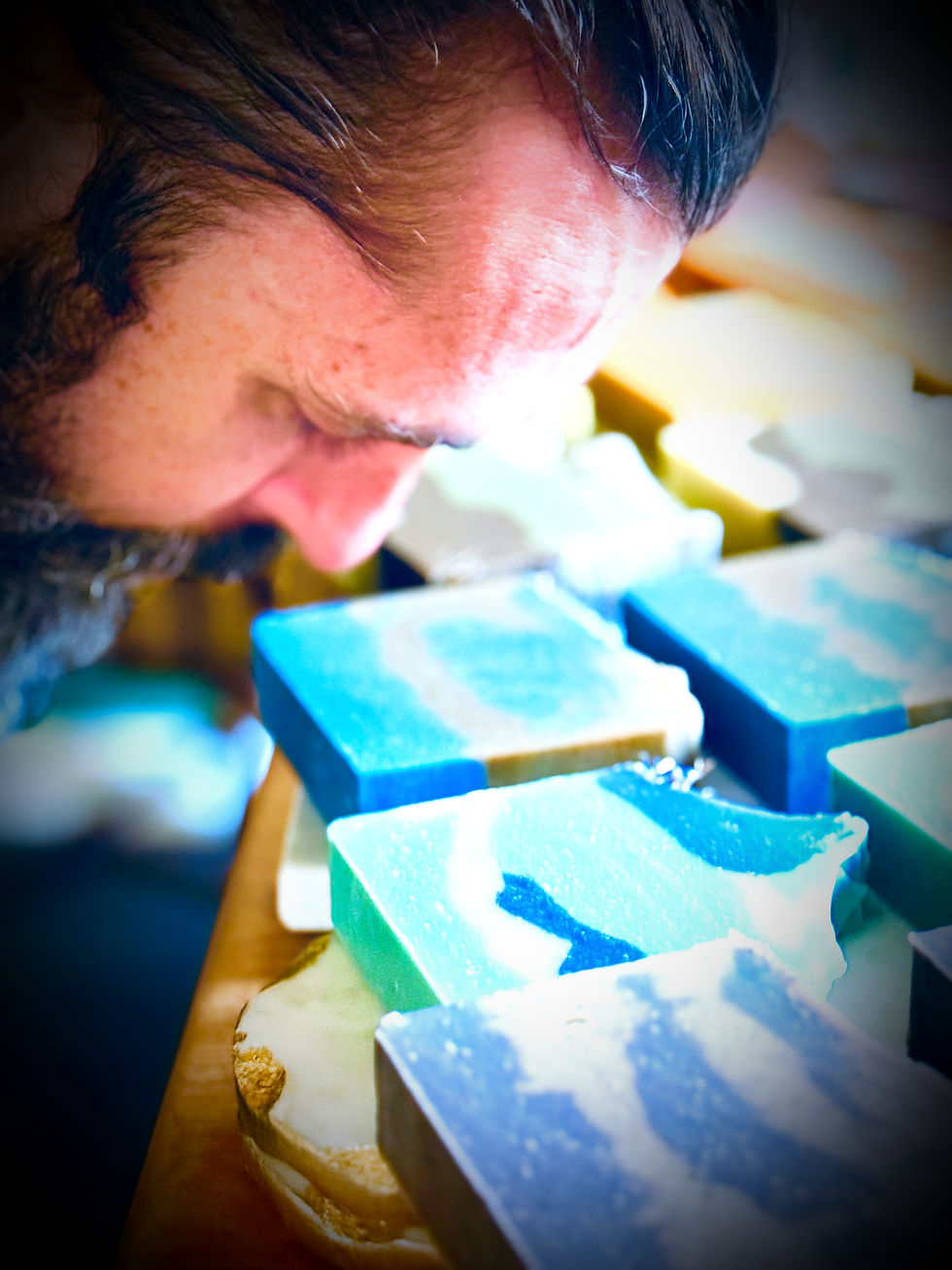
It is a slow process, by design — one that allows each formulation to be adjusted, understood, and trusted before it is ever shared more widely.

This work is guided by a few quiet commitments:
— Ethical sourcing, with care for both land and labor.
— Traceability, knowing where materials come from and how they are made.
— Minimal, thoughtful packaging, in keeping with the integrity of the ingredients themselves.
It feels fitting that this reflection arrives on Earth Day — a quiet acknowledgment of where all of this begins.
Everything I work with comes, in one way or another, from the earth. And with that comes a responsibility — to source thoughtfully, to create carefully, and to give something back where I can.

As a partner of One Tree Planted, I continue to plant trees in honor of this day — a small gesture, but a meaningful one.
Apothecary Addict proudly partners with One Tree Planted as part of a commitment to sustainability and environmental care. A portion of every sale is donated to this wonderful environmental charity that is dedicated to reforestation.
A return, in kind.

The name Apothecary Addict was never meant to suggest excess, but rather a kind of devotion — and, just as much, a genuine and growing passion.
It began, quite simply, with accumulation. Oils, butters, herbs, resins — more than I needed, perhaps, but never more than I wanted to understand. My apothecary grew steadily, and with it, so did my desire to experiment, to refine, to learn.
I found myself returning to these materials again and again — studying them, working with them, exploring their nuances — not out of obligation, but out of a deep and abiding curiosity.
If there is an addiction here, it is not to possession, but to process — the gathering, the blending, the making. The quiet act of transforming raw elements into something both useful and beautiful.
This way of working is not unfamiliar to me. As a classically trained flutist — one whose life has long been shaped by practice, repetition, and devotion to craft — I recognize the same rhythm here. The same desire to return, refine, and deepen over time.

Over time, the word addict began to feel less like exaggeration, and more like truth.
Apothecary — history, lineage, earth
Addict — devotion, repetition, study
It was not a name I constructed — it was one I recognized.
If you find yourself drawn to these materials — to their textures, their scents, their quiet transformations — this is an invitation to notice them more closely, and perhaps to see them as I do.
In the end, the name Apothecary Addict came to hold both meanings at once — a reverence for an old-world tradition rooted in the earth, and a personal devotion to the ongoing practice of learning, gathering, and creating from it.
It was not a name I constructed.
It was something I recognized.
And perhaps this is the truest meaning of an apothecary — not simply a keeper of ingredients, but a keeper of a way of working. One that remains, even now, rooted in the earth.
HAPPY EARTH DAY.
If you feel called to explore further, you are warmly invited:
For those who are curious about what goes into my creations — the oils, butters, botanicals, clays, and resins that form the foundation of this work — the living record may be found here:
Ingredient Encyclopedia https://www.apothecaryaddict.com/ingredient-encylopedia
For those who feel called to the deeper intention behind this practice — a commitment to the earth, to thoughtful sourcing, and to giving back in kind — you may explore this work further here:
One Tree Planted Partnership https://www.apothecaryaddict.com/one-tree-planted
For those who wish to experience this philosophy brought fully to life, the Healing Earth Collection offers a reflection of that relationship — rooted in the materials of the earth, and created with reverence for them:
Healing Earth https://www.apothecaryaddict.com/healing-earth
For those drawn to the quiet purity of tradition, the Castile Collection offers a return to one of the oldest forms of soap making — simple, enduring, and deeply connected to its origins:
Castile Bars https://www.apothecaryaddict.com/castile-bars
And for those who wish to wander a little closer — behind the workshop doors, into the daily rhythm of the apothecary — you are warmly invited to follow along:
Instagram — @apothecary.addict

Very interesting to hear about the origins of Apothecary Addict!